Popular Products


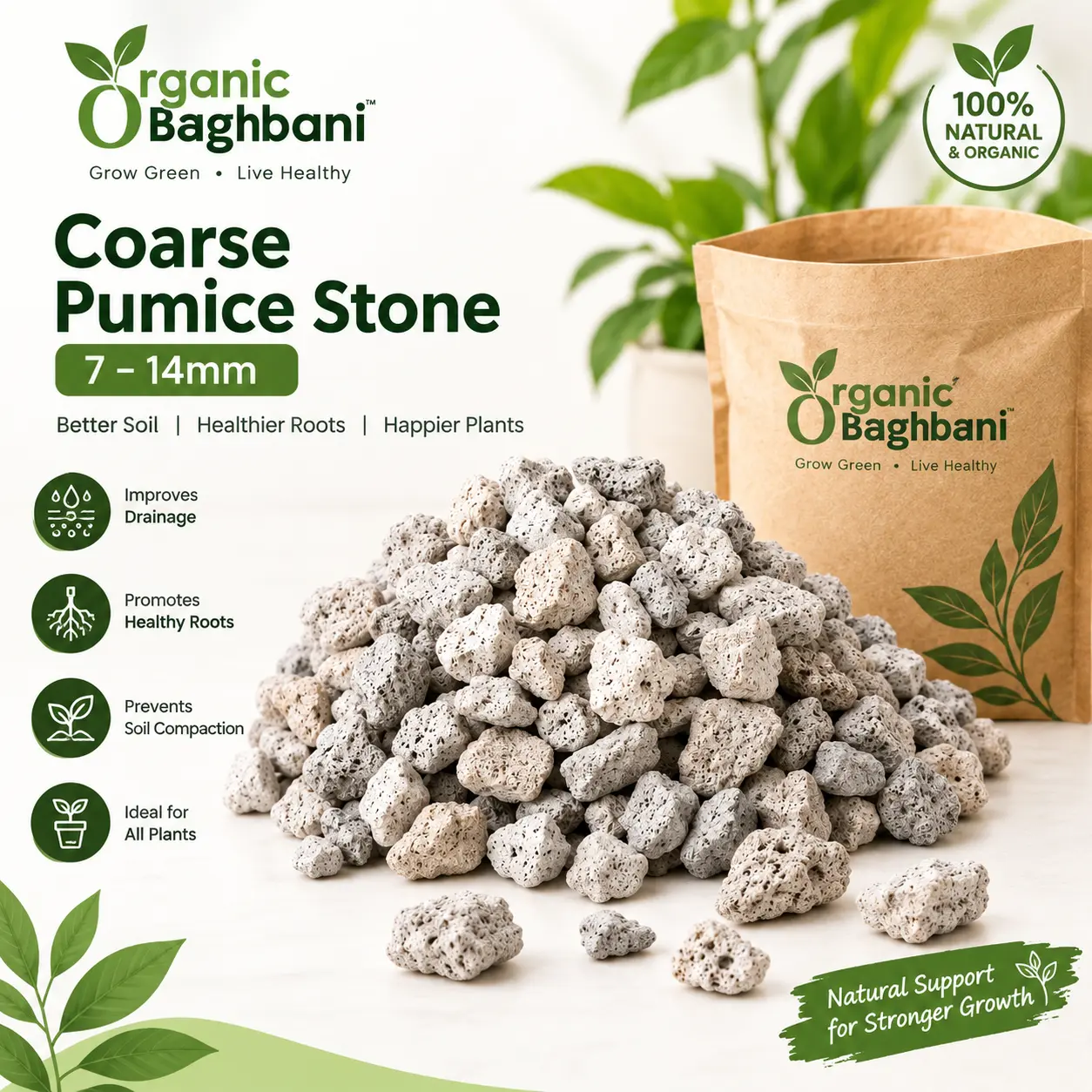
Organic Baghbani Pumice Stone 7–14mm is a coarse, natural volcanic pumice that aerates potting mix and improves drainage for bonsai, cactus, succulents, Monstera and other container plants. It is lightweight, inert and does not compact or rot, so your mix stays open and roots get oxygen season after season.
How Your Order Reaches You 🌿
Live step-by-step process from our store to your doorstep across Pakistan
| Plant | Why 7–14mm works | Starting mix (by volume) |
|---|---|---|
| Bonsai (pine, juniper, ficus and others) | Coarse particles give the open, free-draining base bonsai roots need | 30–50% pumice, the rest akadama or fine granular bonsai soil; adjust by species. Use 3–6mm for small bonsai and upper layers |
| Cactus and succulents (echeveria, haworthia, aloe) | A gritty mix dries fast between waterings, like desert soil | 50–70% pumice, 30–50% well-draining potting soil |
| Monstera, philodendron, pothos (aroids) | A chunky mix lets thick aerial-root plants breathe | About one-third pumice, one-third orchid bark, one-third potting mix |
| Adenium (desert rose) and caudex plants | Prone to rot, so they need a near-mineral mix | 50–60% pumice, the rest potting soil |
| Orchids in bark mix | Adds stable, long-lasting aeration to bark | 20–30% pumice added to the bark mix |
| Rosemary, lavender, thyme | Mediterranean herbs like sharp drainage | 30–40% pumice in potting soil |
| Roses, bougainvillea, citrus and other large pots | Opens up heavy garden soil | 15–25% pumice in a soil and compost mix |
| Specification | Details |
|---|---|
| Product | Pumice Stone 7–14mm, coarse horticultural grade |
| Brand | Organic Baghbani |
| Material | Natural volcanic pumice |
| Particle size | 7–14 mm |
| Texture | Coarse, porous, lightweight |
| Nutrient content | None (inert mineral amendment) |
| Primary use | Soil aeration, drainage, chunky mixes, top dressing |
| Suitable for | Bonsai, cactus, succulents, Monstera and aroids, adenium, orchids (bark mix), large pots |
| Not ideal for | Seedlings, seed-starting, mini pots (use Fine Pumice 3–6mm) |
| Pack sizes | 1 kg, 2 kg, 5 kg, 10 kg, 25 kg |
| Origin | Pakistan/Asia |
| Bulk orders | Special discount on bulk quantity |
| Delivery | Across Pakistan in 2–4 working days; same-day in major cities |
For larger pots and chunky mixes such as Monstera, bonsai and succulents, 7–14mm works well. For small pots, seedlings and cuttings, 3–6mm is a better fit because finer particles hold more moisture and fill small containers evenly.
For some plants, such as cactus, adenium and bonsai, a very mineral mix works, but the plant will need more frequent watering and regular feeding because pumice holds few nutrients. Most plants do best with pumice blended into potting mix.
It depends on the plant. As a starting point, use 15–25% for roses and large pots, about a third for Monstera, 30–50% for bonsai and 50–70% for cactus and succulents. Increase the share if the mix stays wet too long.
Both are volcanic and improve aeration, but pumice is heavier and more durable, so it stays mixed through the soil and keeps its shape longer. Perlite is lighter and tends to float up.
No. Pumice is an inert mineral amendment and does not feed plants. Keep fertilising as usual, and a little more regularly in high-pumice mixes.
Pumice is a natural mineral, not a fertiliser or a chemical. Like any soil product, keep it away from children and pets who might chew or swallow it.
Prices are shown per pack size on this page, with a special discount on bulk quantities. After you order we call to confirm, dispatch the same or the next day, and deliver in 2–4 working days across Pakistan, with same-day delivery in major cities.
People also search for: Pumice Stone 7-14mm Coarse, Pumice Stone 7-14mm Coarse Price in Pakistan, Best Mineral Amendments - Aeration & Drainage Additives for Gardening, Seed Starting & Potting Soil Mix.
At Organic Baghbani, we believe in nurturing nature the way it was meant to be. Our mission is to help Pakistani gardeners, farmers, and plant lovers grow healthier, greener plants without relying on harsh synthetic chemicals. All our organic fertilizers and soil amendments are carefully prepared to deliver maximum nutrients directly to your plants' roots.
Bring your garden back to life with 100% natural nutrition.
🌿 100% Natural & Safe: Completely free from toxic chemicals, making it safe for your family, pets, and the environment.
🌱 Improves Soil Health: Restores natural microbes in the soil, ensuring long-term fertility and explosive plant growth.
📦 Fast Nationwide Delivery: Secure and prompt shipping right to your doorstep, anywhere in Pakistan.
👨🌾 Premium Quality Guaranteed: Lab-tested and specifically suited for the harsh Pakistani climate.
No account yet?
Create an Account


Reviews
Clear filtersThere are no reviews yet.