Popular Products



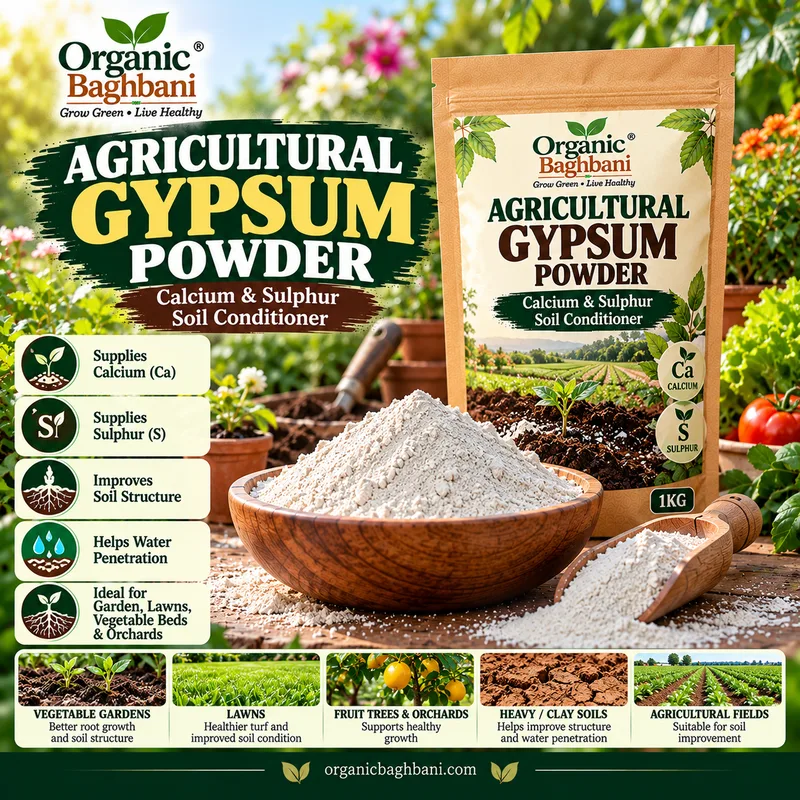
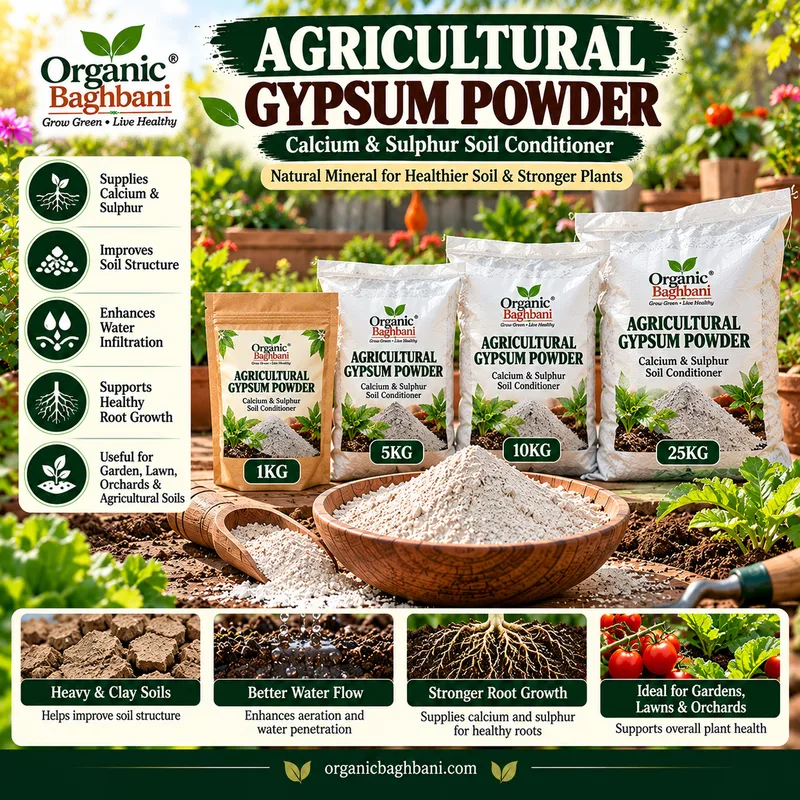
Gypsum is calcium sulphate, a soft mineral that supplies calcium and sulphur without changing soil pH. Ground to powder, it helps loosen hard, crusting بھاری مٹی (heavy soil) and can help with soil that is high in sodium. It is not a fertiliser, not a pH adjuster and not a quick fix for every salty patch – test first, then dose.
How Your Order Reaches You 🌿
Live step-by-step process from our store to your doorstep across Pakistan
Meaning of Agricultural Gypsum Powder in Urdu is “زرعی جپسم پاؤڈر” کیلشیم سلفیٹ پر مشتمل پسا ہوا معدنی پتھر، جو سخت اور کلر والی مٹی کو نرم کرنے اور پودوں کو کیلشیم اور سلفر دینے کے کام آتا ہے. If water sits on your soil, the surface cracks into a hard crust, or white salt patches keep coming back, this is the mineral gardeners and farmers reach for first.
It is a dry mineral powder made by grinding mined gypsum rock. It is unlike limestone in one important way: it dissolves more readily in water, so it releases calcium and sulphate faster, and it does not push pH up. It is also not plaster of Paris or wall putty, which set hard when wet and must never go on soil.
| Question | Answer |
|---|---|
| What is it? | Gypsum, CaSO₄·2H₂O (calcium sulphate dihydrate). A soil conditioner, not a fertiliser. |
| Product type | Neutral calcium-sulphur soil conditioner |
| Grade | Typical for gypsum: about 19–23% calcium and 15–19% sulphur. High purity agricultural grade (90-95%), finely ground (80-100 mesh). |
| What does it do? | Helps loosen heavy clay, improves water penetration, supplies calcium and sulphur, and helps replace sodium in sodic soil. |
| Does it change pH? | Pure gypsum does not. Unlike limestone, it generally does not affect soil pH, though some natural sources contain a little dolomite or lime that can raise pH slightly. |
| How much? | Starting points: about 100 g per m² in beds and lawns. Farm rates depend on a soil test. |
| How fast? | Faster than limestone, but still gradual – typically weeks to a season. |
| What is it not for? | Not a fertiliser, pH adjuster, pest control, or anything to eat. Not a cure for every salty soil. |
Gypsum is often bought for the wrong problem. Use this quick check first.
| Your situation | Is gypsum the answer? |
|---|---|
| Hard, sticky clay that crusts when dry and floods when wet | Yes – it helps clay particles clump so water and air move better. |
| A test shows high sodium (sodic soil) | Yes – calcium replaces sodium, which then needs to be washed away with good irrigation and drainage. |
| White salt crust but the test shows low sodium | Not on its own. Other salts need drainage and leaching, not calcium. |
| Soil is acidic and needs its pH raised | No. Use a liming product instead. |
| Soil is alkaline and you want pH lowered | No. Gypsum does not lower pH like sulphur-type products do. |
| Plants need calcium but pH is already right | Yes – a calcium source that leaves pH alone. |
Heavy clay, crusted surfaces and salt-affected patches are common problems in parts of Pakistan, especially where irrigation water is hard or evaporation is high. A soil test that reports sodium, salinity and pH together tells you which of these you really have, and an agriculture university or provincial soil lab can run it.
Looking for gypsum near me? Order online from Organic Baghbani and see related products in our Soil pH Adjusters & Conditioners category.
Results depend on your soil, your plants and your watering.
These are conservative starting points for home gardens. Farm-scale and sodic-soil rates are set by a soil test, so message us on WhatsApp with your test report. A level teaspoon of fine powder is roughly 4–5 g, but a kitchen scale is better.
| Situation | Starting amount | Notes |
|---|---|---|
| Heavy clay vegetable or flower bed | About 100 g per m² | Scatter, then work into the top 10–15 cm and water in. Retest before repeating. |
| Lawn (لان) with hard, compacted soil | About 50–100 g per m² | Scatter evenly, brush in, water well. |
| Fruit trees (پھلدار درخت) | About 100 g per m² under the canopy | Fork in lightly; keep it off the trunk. |
| Pots and potting mix (گملے کی مٹی) | About 1 g per litre, roughly a quarter level teaspoon | Only if you want extra calcium and pH is already right. |
| Sodic or salty field | Test-based | Rates run far higher; send your lab report for advice. |
| Seeds and seedlings | None directly | Work it into the bed beforehand. |
Apply once per season at first, and retest before adding more.
| Option | Main job | Changes pH? | Choose it when |
|---|---|---|---|
| Gypsum (this product) | Calcium and sulphur, structure, sodium | No | Heavy clay, sodic soil, or calcium needed at the right pH. |
| Limestone, calcium carbonate or dolomite | Raise pH of acidic soil | Raises it | Soil is acidic. |
| Sulphur-type products | Lower pH | Lowers it | Soil is alkaline and pH must come down. |
| Epsom salt (magnesium sulphate) | Fast magnesium and sulphate | No | A quick magnesium top-up is needed. |
| Organic compost | Organic matter, slow nutrition | Not a pH corrector | You also want soil structure to improve over seasons. |
| Rice husk | Aeration and mulch | No | Heavy soil needs physical opening up; it breaks down slowly. |
For more choices, browse the For Alkaline Soils range.
| Pack Size | Effective Rate | Pack Price | Select |
|---|---|---|---|
1kg | ₨ 150 / KG | ₨ 150 | |
5kg | ₨ 90 / KG | ₨ 450 | |
10kg | ₨ 70 / KG | ₨ 700 | |
25kg | ₨ 68 / KG | ₨ 1,700 |
According to Wikipedia’s gypsum article, gypsum is moderately water-soluble, at roughly 2.0–2.5 g per litre, and as a fertiliser it supplies two secondary plant nutrients, calcium and sulphur, and unlike limestone it generally does not affect soil pH. The same article describes how adding it to sodic soil reduces the exchangeable sodium percentage, and notes that it improves soil structure, water absorption and aeration. In simple terms, calcium from gypsum takes the place of sodium on clay particles, the particles clump together, and the freed sodium can then be washed down with irrigation water, provided the field drains.
| Specification | Details |
|---|---|
| Product | Gypsum (calcium sulphate dihydrate) |
| Brand | Organic Baghbani |
| Form | Dry powder |
| Calcium content | Typically about 19–23% (general value, not a test of each batch) |
| Sulphur content | Typically about 15–19% (general value, not a test of each batch) |
| Water solubility | Moderately soluble, roughly 2 g per litre |
| Effect on pH | None for pure gypsum |
| Purity | ~90-95% Calcium Sulphate Dihydrate (CaSO₄·2H₂O) |
| Particle size | 80 – 100 mesh (Fine powder for rapid soil penetration) |
| Appearance | Off-white to light gray powder (ہلکا سفید یا سرمئی پاؤڈر) |
| Additives | None (100% natural mined mineral) |
| Origin and source | Pakistan (Salt Range / Kohat regions) |
| Packaging and pack sizes | 1KG, 5KG, 10KG, 25KG |
| Claim | Soil conditioner that supplies calcium and sulphur without changing pH |
| Primary use | Improving heavy clay, correcting sodic soil, supplying calcium and sulphur |
| Suitable for | Vegetables, lawns, fruit trees and field crops growing in clay or sodic soil |
| Not ideal for | Raising or lowering pH; pest or disease control; building plaster or casting; eating |
| Category | Soil pH Adjusters & Conditioners › For Alkaline Soils |
| Bulk orders | Special discount – WhatsApp or call 03119073909 |
People also search for: Agricultural Gypsum Powder, Agricultural Gypsum Powder Price in Pakistan, Best Alkaline & Saline Soil Correctors for Gardening, Seed Starting & Potting Soil Mix.
At Organic Baghbani, we believe in nurturing nature the way it was meant to be. Our mission is to help Pakistani gardeners, farmers, and plant lovers grow healthier, greener plants without relying on harsh synthetic chemicals. All our organic fertilizers and soil amendments are carefully prepared to deliver maximum nutrients directly to your plants' roots.
Bring your garden back to life with 100% natural nutrition.
🌿 100% Natural & Safe: Completely free from toxic chemicals, making it safe for your family, pets, and the environment.
🌱 Improves Soil Health: Restores natural microbes in the soil, ensuring long-term fertility and explosive plant growth.
📦 Fast Nationwide Delivery: Secure and prompt shipping right to your doorstep, anywhere in Pakistan.
👨🌾 Premium Quality Guaranteed: Lab-tested and specifically suited for the harsh Pakistani climate.
No account yet?
Create an Account


Reviews
Clear filtersThere are no reviews yet.