Popular Products


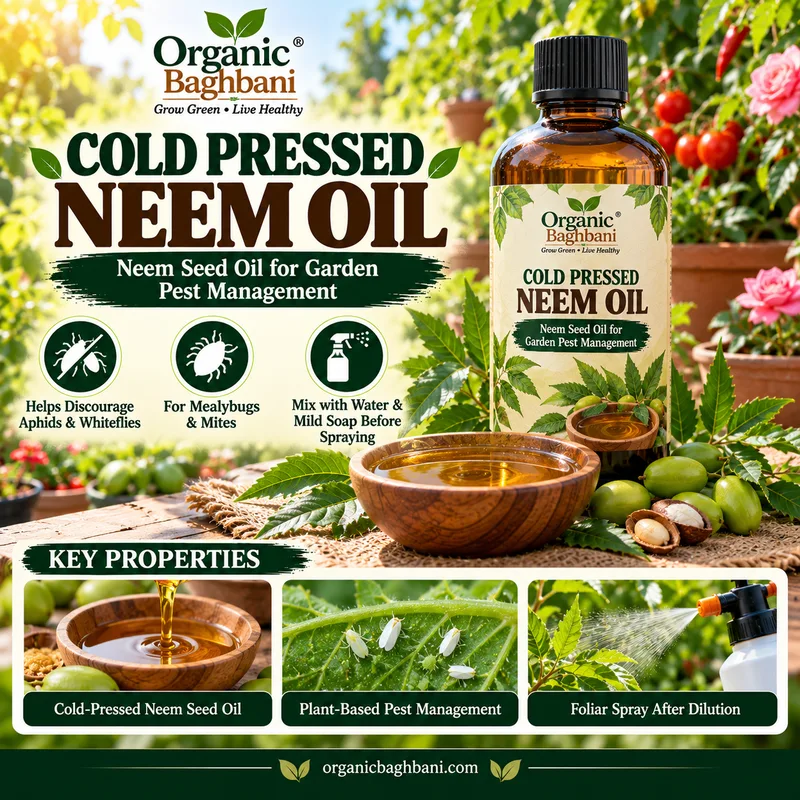


A cold-pressed neem seed oil that you mix into water with a little mild liquid soap and spray on leaves to discourage soft-bodied garden pests such as aphids (تیلا), whiteflies (سفید مکھی), mealybugs and mites. Oil and water do not mix on their own, so the soap acts as an emulsifier, and the sprayer needs a shake as you work. It works by reducing feeding and disrupting growth, so it is best used early and repeated, not as a one-shot rescue. It is not a fertiliser, and it will not repair plants already stripped by a heavy attack or by pests hiding inside stems.
How Your Order Reaches You 🌿
Live step-by-step process from our store to your doorstep across Pakistan
Meaning of Cold Pressed Neem Oil in Urdu is “کولڈ پریسڈ نیم کا تیل” نیم کے پھلوں اور بیجوں کو دبا کر نکالا گیا نباتاتی تیل جسے پانی اور تھوڑے سے ہلکے صابن میں ملا کر پتوں پر سپرے کیا جاتا ہے تاکہ کیڑے پودوں سے دور رہیں۔ This Organic Baghbani oil is made for home gardeners who want to mix their own plant-based spray against aphids, whiteflies, mealybugs and mites before reaching for a harsh chemical.
Neem oil, also known as margosa oil, is a vegetable oil pressed from the fruits and seeds of the neem tree (نیم, Azadirachta indica), a tree native to the Indian subcontinent. Cold pressed means the oil is squeezed out mechanically at low temperature rather than extracted with solvents or high heat. Because oil floats on water, you measure a small amount, blend it with a few drops of soap and water, and spray the mix over the leaves.
| Question | Answer |
|---|---|
| What is it? | Cold-pressed neem seed oil, a liquid oil that you mix with a little mild soap and dilute in water: a plant-based pest repellent for leaves and stems. |
| What does it do? | Helps discourage feeding and slow the growth of soft-bodied pests such as aphids, whiteflies, thrips, mealybugs and mites. |
| Who is it for? | Kitchen gardens, rooftop and balcony growers, rose and fruit-tree owners, small nurseries. |
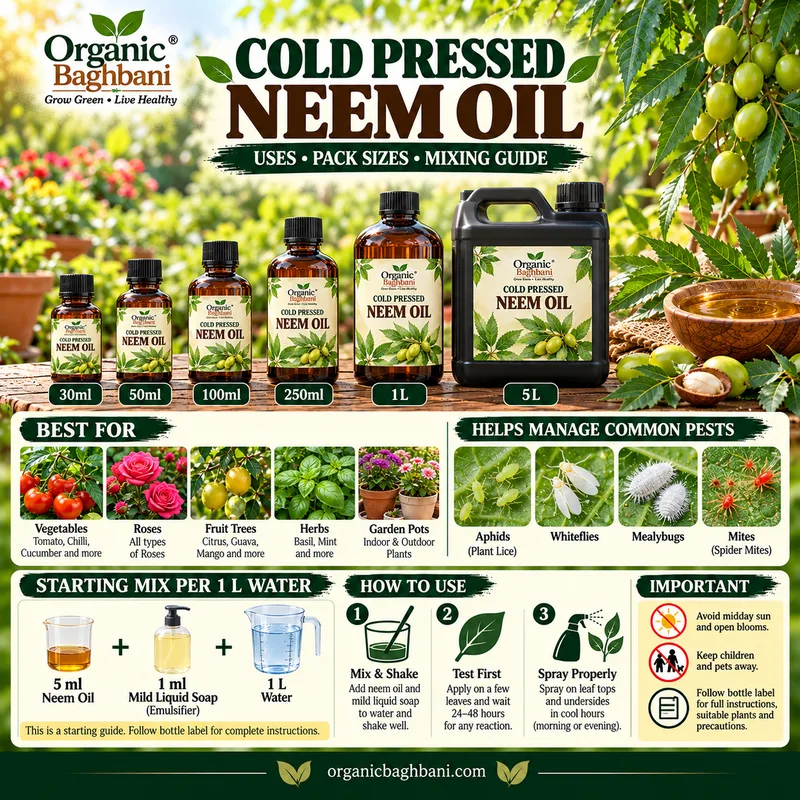
| How much should you use? | A starting point of about 5 ml of oil and about 1 ml of mild liquid soap per litre of water, unless your bottle label says otherwise. |
| Which sizes are available? | 30 ml, 50 ml, 100 ml and 500 ml. |
| What is it not for? | Not a fertiliser, not a cure for heavy infestations or pests inside stems, not for swallowing, and not for spraying in strong midday sun. |
Pests get a long season in Pakistani gardens. Hot, dry spells are followed by humid monsoon weeks, and aphids, whiteflies and mites can build up fast on soft new growth just as roses, chillies, tomatoes and citrus put out fresh leaves. In close-packed rooftop and balcony gardens, a few pests on one pot can reach the next pot within days.
Stressed plants are easier targets, so a light spray routine works best together with steady watering and healthy soil (مٹی). Regular, early sprays are also easier on your plants and your budget than waiting for a full outbreak.
If you have been searching for neem oil near me, you can order a bottle from Organic Baghbani and browse the rest of our Insecticides & Pest Repellents range.
Results depend on the pest, your plants, your watering and the weather.
These are conservative starting points, not fixed rules. If your bottle label gives different directions, follow the label.
| Use | Starting amount per litre of water | Notes |
|---|---|---|
| Vegetables and herbs (tomato, chilli, brinjal, okra, mint) | About 5 ml oil + about 1 ml mild liquid soap | Spray in the evening, cover leaf undersides, wash produce well before eating. |
| Roses and flowering plants | About 5 ml oil + about 1 ml mild liquid soap | Spray buds and stems; avoid open blooms where bees feed. |
| Fruit trees (citrus, guava, young mango) | About 5 ml oil + about 1 ml mild liquid soap | Use a pressure sprayer and wet the leaves evenly without heavy runoff. |
| Indoor and balcony pots | About 5 ml oil + about 1 ml mild liquid soap | Spray away from direct sun and wipe leaf undersides; test one leaf first. |
| Seedlings, succulents, cactus, ferns | Test one leaf first, then use a weaker mix | These can be more sensitive to oil sprays. |
Typical starting rhythm: every 7–14 days to prevent pests, or every 5–7 days for two or three rounds when pests are already present, then reduce.
| Bottle | Spray it makes at about 5 ml per litre | Good for |
|---|---|---|
| 30 ml | About 6 litres | A few pots, one balcony, a first trial |
| 50 ml | About 10 litres | A small kitchen garden or a rose corner |
| 100 ml | About 20 litres | A rooftop garden, several beds, a regular routine |
| 500 ml | About 100 litres | A large garden, nursery, small orchard or season-long use |
Neem comes in useful forms for the garden, but only one of them is a leaf spray.
| Product | What it is | Where it goes | Main job |
|---|---|---|---|
| This neem seed oil | Cold-pressed neem seed oil, mixed with water and a little mild soap before spraying | Leaves and stems, diluted | Repels and discourages pests |
| Neem cake | Neem seed solids left after the oil is pressed, a granular organic fertiliser | Worked into the soil | Feeds the soil and plants; works at soil level |
| Neem leaf compost | Composted neem leaves (نیم کے پتوں کی کھاد) | Soil or potting mix | Builds soil; it is not a pest spray |
The pest-repelling reputation of neem comes mainly from the seeds, not the leaves. Many gardeners use both: a spray for the leaves above, and neem cake or compost for the soil below.
Neem extracts act as an antifeedant, and they block the action of ecdysone, the hormone insects need to molt. Azadirachtin is the most active of these growth regulators, and nimbin is credited with some of neem oil’s antifungal and antiseptic properties, according to Wikipedia’s neem oil article. Because the action is on feeding and growth, results usually show over days rather than minutes, which is why repeat sprays matter.
Azadirachtin levels differ between oils and batches, so we do not quote a percentage. Treat this as a pest-management tool, and do not count on it as a cure for serious plant disease.
| Pack Size | Effective Rate | Pack Price | Select |
|---|---|---|---|
30ml | ₨ 13,333 / L | ₨ 400 | |
50ml | ₨ 10,000 / L | ₨ 500 | |
100ml | ₨ 10,500 / L | ₨ 1,050 | |
250ml | ₨ 8,800 / L | ₨ 2,200 | |
1l | ₨ 6,300 / L | ₨ 6,300 | |
5l | ₨ 5,400 / L | ₨ 27,000 |
People also search for: Cold Pressed Neem Oil, Cold Pressed Neem Oil Price in Pakistan, Best Insecticides & Pest Repellents for Gardening, Seed Starting & Potting Soil Mix.
At Organic Baghbani, we believe in nurturing nature the way it was meant to be. Our mission is to help Pakistani gardeners, farmers, and plant lovers grow healthier, greener plants without relying on harsh synthetic chemicals. All our organic fertilizers and soil amendments are carefully prepared to deliver maximum nutrients directly to your plants' roots.
Bring your garden back to life with 100% natural nutrition.
🌿 100% Natural & Safe: Completely free from toxic chemicals, making it safe for your family, pets, and the environment.
🌱 Improves Soil Health: Restores natural microbes in the soil, ensuring long-term fertility and explosive plant growth.
📦 Fast Nationwide Delivery: Secure and prompt shipping right to your doorstep, anywhere in Pakistan.
👨🌾 Premium Quality Guaranteed: Lab-tested and specifically suited for the harsh Pakistani climate.
No account yet?
Create an Account


Reviews
Clear filtersThere are no reviews yet.