Popular Products


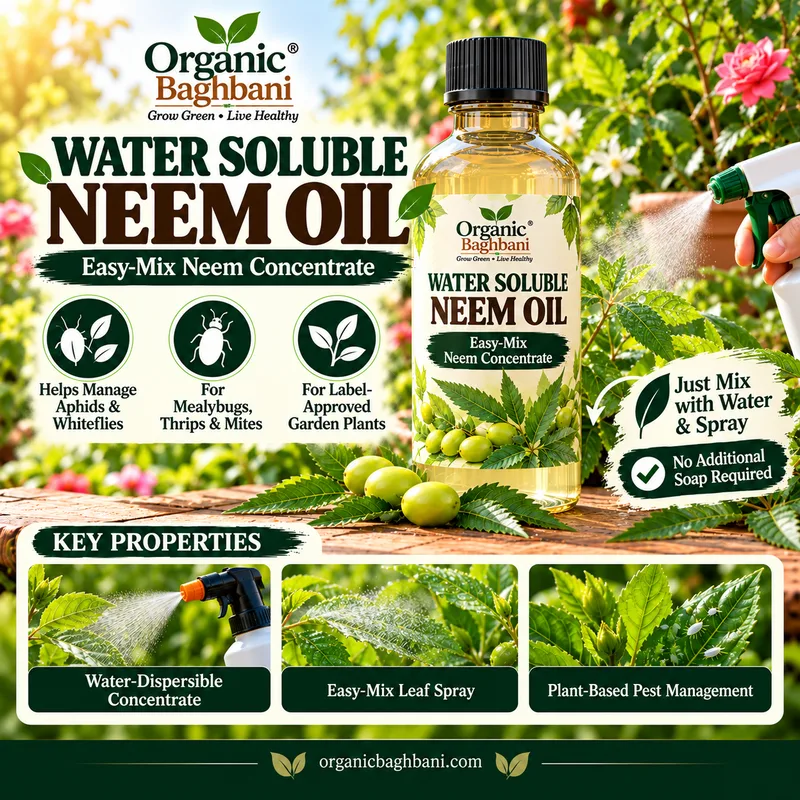
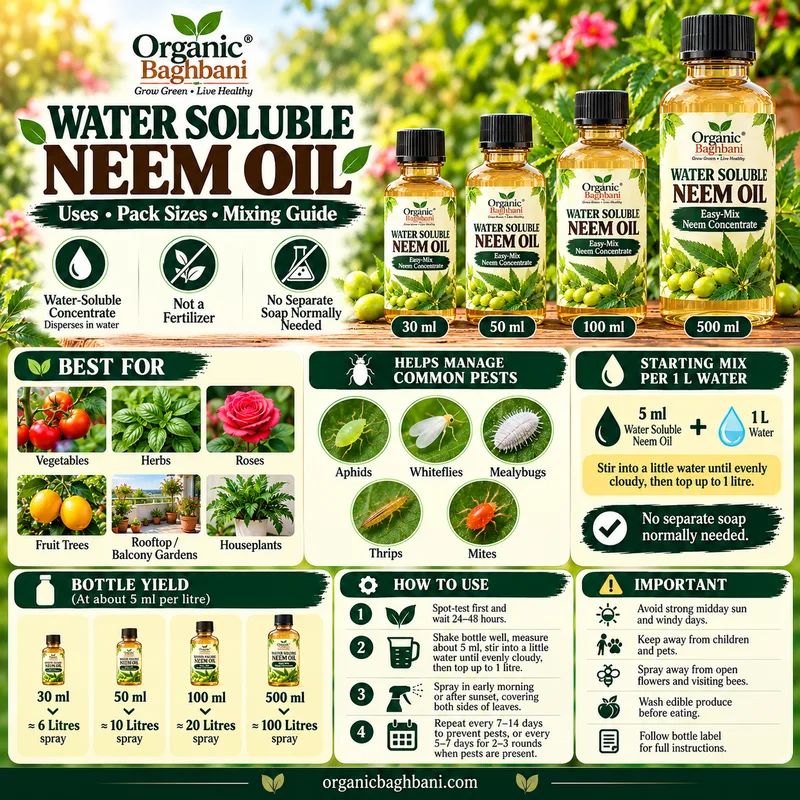

A water-soluble neem concentrate made to disperse in water, so you can mix a leaf spray without fighting oily clumps. Used as a neem oil for plants such as vegetables, roses, fruit trees and houseplants, it helps discourage soft-bodied pests like aphids (تیلا), whiteflies (سفید مکھی), mealybugs, thrips and mites. It works by reducing feeding and disrupting growth, so spray early and repeat. It is not a fertiliser, and it cannot rescue plants already stripped by a heavy attack or by pests hiding inside stems.
How Your Order Reaches You 🌿
Live step-by-step process from our store to your doorstep across Pakistan
Meaning of Water Soluble Neem Oil in Urdu is “پانی میں گھلنے والا نیم کا تیل” نیم کے پھلوں اور بیجوں سے حاصل کیا گیا تیل جو اس طرح تیار کیا گیا ہے کہ پانی میں آسانی سے مل جائے اور پتوں پر سپرے کیا جا سکے۔ Organic Baghbani’s easy-mix concentrate is made for gardeners who like neem’s plant-based reputation but are tired of oily clumps, blocked nozzles and guesswork.
Neem oil, also known as margosa oil, is a vegetable oil pressed from the fruits and seeds of the neem tree (نیم, Azadirachta indica), a tree native to the Indian subcontinent. Plain neem oil floats on water. A water-soluble formula is prepared so that the oil spreads through the water instead, which makes a quick, even leaf spray possible. The full ingredient list is printed on the bottle label.
| Question | Answer |
|---|---|
| What is it? | A water-soluble neem concentrate: an easy-mix botanical pest repellent for leaves and stems. |
| What does it do? | Helps discourage feeding and slow the growth of soft-bodied pests such as aphids, whiteflies, thrips, mealybugs and mites. |
| What makes it easy? | It is formulated to disperse in water, so you can mix a spray from a small measure without fighting floating oil. |
| How much should you use? | A starting point of about 5 ml per litre of water, unless your bottle label says otherwise. |
| Which sizes are available? | 30 ml, 50 ml, 100 ml and 500 ml. |
| Who is it for? | Kitchen gardens, rooftop and balcony growers, rose and fruit-tree owners, houseplant lovers, small nurseries. |
| What is it not for? | Not a fertiliser, not a rescue for heavy infestations or pests inside stems, not for swallowing, and not for spraying in strong midday sun. |
Pests keep Pakistani gardens busy for most of the year. A warm spring brings aphids and thrips onto fresh growth, monsoon humidity can suit mealybugs and whiteflies, and rooftop pots packed side by side let one infestation travel fast.
A common frustration with neem is the mixing: oil floats, nozzles clog and the spray goes on unevenly. An easy-mix concentrate removes that hurdle, so a regular spraying routine becomes realistic even with a small hand sprayer on a balcony.
If you have been searching for neem oil spray near me, you can order a bottle from Organic Baghbani and browse the rest of our Insecticides & Pest Repellents range.
Most neem problems come from the mix, the timing or unrealistic expectations. These are the common ones.
| Problem | Why it happens | What to do |
|---|---|---|
| Oily clumps or floating oil in the sprayer | Oil and water separate if the measure is poured in too fast or the water is not stirred | Pour the measured oil into a little water, stir until it turns evenly cloudy, then top up. Shake the sprayer as you work. If oil still floats, follow the bottle label. |
| Clogged nozzle or sticky leaves | Undispersed droplets or a mix that is too strong | Mix fresh each time, never stronger than the label, and rinse the sprayer with clean water afterwards. |
| Leaves spot or burn | A strong mix, strong sun or heat, or a stressed plant | Spot-test first, spray in the cool evening and start at about 5 ml per litre. |
| “It did not work” | Neem reduces feeding and growth, so it needs days and repeat sprays, and leaf undersides are often missed | Cover both sides of the leaves, repeat on schedule and remove heavy colonies by hand or with a water jet first. If nothing changes after three rounds, message us on WhatsApp 03119073909 with the plant and pest. |
| Not sure about the dose | Instructions online vary widely | Use one conservative starting point, follow the label and plan with the bottle-yield table below. |
| Worried about harvest, bees or children | It is plant-based, but it is still a spray | Follow the waiting period on the label, wash produce, spray at dusk away from open flowers and keep the bottle out of reach. |
| Bottle looks damaged on arrival | Courier handling | Check the seal when it arrives and message us on WhatsApp straight away with a photo. |
Results depend on the pest, your plants, your watering and the weather.
These are conservative starting points, not fixed rules. If your bottle label gives different directions, follow the label.
| Plant | Pests gardeners commonly fight | Starting amount per litre of water | Notes |
|---|---|---|---|
| Tomato, chilli, brinjal | Whiteflies, thrips, mites | About 5 ml | Spray in the evening and wash fruit before eating. |
| Roses and hibiscus | Aphids, mealybugs, thrips | About 5 ml | Spray buds and stems; avoid open blooms where bees feed. |
| Citrus, guava, young mango | Leaf miners, mealybugs | About 5 ml | Use a pressure sprayer and wet the leaves evenly without heavy runoff. |
| Cabbage and cauliflower | Cabbage worms | About 5 ml | Spray into the leaf folds. |
| Houseplants and balcony pots | Mealybugs, mites | About 5 ml | Spray away from direct sun and wipe leaf undersides; test one leaf first. |
| Seedlings, succulents, ferns | Various | Test one leaf first, then use a weaker mix | These can be more sensitive to oil sprays. |
Typical starting rhythm: every 7–14 days to prevent pests, or every 5–7 days for two or three rounds when pests are already present, then reduce.
| Bottle | Spray it makes at about 5 ml per litre | Good for |
|---|---|---|
| 30 ml | About 6 litres | A few pots or a first trial |
| 50 ml | About 10 litres | A balcony or a rose corner |
| 100 ml | About 20 litres | A kitchen garden or a rooftop |
| 500 ml | About 100 litres | A large garden, nursery or season-long use |
To compare value between sizes, divide the bottle price by the litres in this table.
| Product | What it is | How you use it | Main job |
|---|---|---|---|
| This water-soluble formula | Neem oil formulated to disperse in water | Measure, stir into a little water, top up and spray | Leaf spray that repels and discourages pests |
| Plain neem oil | Neem oil that floats on water | Needs a mild soap and hard shaking to mix | Leaf spray, with more mixing work |
| Neem cake | Neem seed solids left after the oil is pressed, a granular organic fertiliser | Worked into the soil | Feeds the soil and plants |
| Neem leaf compost | Composted neem leaves (نیم کے پتوں کی کھاد) | Soil or potting mix | Builds soil; it is not a pest spray |
The pest-repelling reputation of neem comes mainly from the seeds, not the leaves. Many gardeners use a spray for the leaves above and neem cake or compost for the soil below.
Neem extracts act as an antifeedant, and they block the action of ecdysone, the hormone insects need to molt. Azadirachtin is the most active of these growth regulators, according to Wikipedia’s neem oil article. Because the action is on feeding and growth, results usually show over days rather than minutes, which is why repeat sprays matter.
Azadirachtin levels differ between oils and batches, so we do not quote a percentage. Treat this as a pest-management tool, and do not count on it to cure serious plant disease.
| Pack Size | Effective Rate | Pack Price | Select |
|---|---|---|---|
30ml | ₨ 7,000 / L | ₨ 210 | |
50ml | ₨ 7,000 / L | ₨ 350 | |
100ml | ₨ 7,700 / L | ₨ 770 | |
500ml | ₨ 5,800 / L | ₨ 2,900 | |
1l | ₨ 4,200 / L | ₨ 4,200 |
People also search for: Water Soluble Neem Oil, Water Soluble Neem Oil Price in Pakistan, Best Insecticides & Pest Repellents for Gardening, Seed Starting & Potting Soil Mix.
At Organic Baghbani, we believe in nurturing nature the way it was meant to be. Our mission is to help Pakistani gardeners, farmers, and plant lovers grow healthier, greener plants without relying on harsh synthetic chemicals. All our organic fertilizers and soil amendments are carefully prepared to deliver maximum nutrients directly to your plants' roots.
Bring your garden back to life with 100% natural nutrition.
🌿 100% Natural & Safe: Completely free from toxic chemicals, making it safe for your family, pets, and the environment.
🌱 Improves Soil Health: Restores natural microbes in the soil, ensuring long-term fertility and explosive plant growth.
📦 Fast Nationwide Delivery: Secure and prompt shipping right to your doorstep, anywhere in Pakistan.
👨🌾 Premium Quality Guaranteed: Lab-tested and specifically suited for the harsh Pakistani climate.
No account yet?
Create an Account


Reviews
Clear filtersThere are no reviews yet.