Popular Products


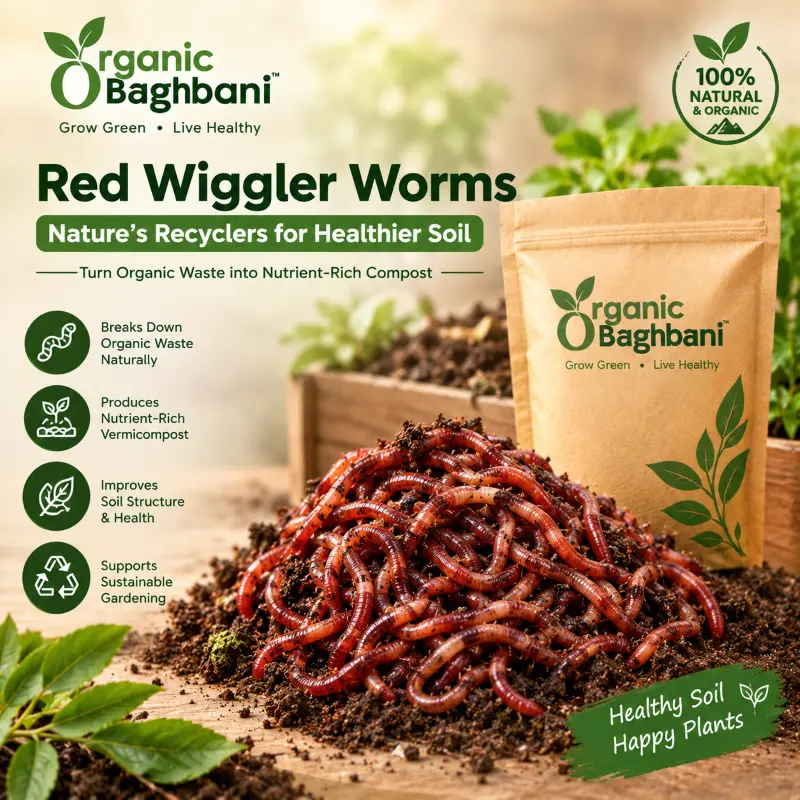
Organic Baghbani Live Red Wiggler Worms (سرخ کیچوے, Eisenia fetida) are surface-dwelling composting worms that turn kitchen scraps, leaves and manure into dark, nutrient-rich vermicompost (کیچوے کی کھاد). Each kg holds roughly 1,200–1,300 active worms, enough to start a home worm bin or boost an existing one. They are made for bins, compost beds and manure heaps, not for deep garden soil.
How Your Order Reaches You 🌿
Live step-by-step process from our store to your doorstep across Pakistan
Organic Baghbani sells live red wiggler worms in a form that is ready to go straight into a bin: Eisenia fetida, the small, reddish, striped composting worm that eats kitchen scraps and turns them into worm castings. Unlike the long garden earthworm that tunnels deep into the soil, these worms live in the top layer of bedding and decaying matter, which makes them the standard choice for worm bins and vermicompost beds. A kg holds roughly 1,200–1,300 worms.
| Question | Answer |
|---|---|
| What are they? | Eisenia fetida, composting worms, also called red wigglers, tiger worms or red worms |
| What do they do? | Eat kitchen waste and bedding and turn it into vermicompost |
| Where do they live? | In the top layer of bedding, compost and manure, not deep in the soil |
| How many in 1 kg? | Roughly 1,200–1,300, depending on size |
| How much can they eat? | Up to about half their body weight per day in a healthy bin |
| What temperature suits them? | About 15–25°C; they get stressed above about 30°C |
| What are they not for? | Deep garden soil, direct sun, hot or waterlogged bins |
| Price | PKR 3,500 per kg |
Kitchen scraps, dry leaves and cardboard pile up, and buying fertiliser all season adds up. A worm bin turns that باورچی خانے کا کچرا (kitchen waste) into vermicompost in a few months, in a small space, without the smell of a rotting heap when the bin is balanced. The worms do the work; you only feed them and keep the bedding damp.
A common guide is about 1 kg of worms for every 2 square feet (0.2 m²) of bin surface. Start with less feed than the maximum and increase it as the worms settle in.
| Worms | Approx. number | Bin surface area | Waste per day at full strength |
|---|---|---|---|
| 1 kg | 1,200–1,300 | About 0.2 m² (2 sq ft) | Up to about 0.5 kg |
| 2 kg | 2,400–2,600 | About 0.4 m² (4 sq ft) | Up to about 1 kg |
| 5 kg | 6,000–6,500 | About 1 m² (10 sq ft) | Up to about 2.5 kg |
| 10 kg | 12,000–13,000 | About 2 m² (20 sq ft) | Up to about 5 kg |
| 25 kg | 30,000–32,500 | About 5 m² (50 sq ft) | Up to about 12 kg |
These are planning figures. Real capacity depends on temperature, moisture, bedding and what you feed.
Do not tip the worms into garden beds or deep soil. They are surface feeders and need a food-rich bin, compost bed or manure heap to thrive.
| Worm | Where it lives | Best for | Suits a worm bin? |
|---|---|---|---|
| Red wiggler (Eisenia fetida) | Surface litter, compost and manure | Vermicompost and kitchen waste | Yes |
| Garden earthworm or nightcrawler | Deep burrows in soil | Tunnelling and aerating soil | No, it does not thrive in bins |
If you only want the finished fertiliser, buy our vermicompost. If you want to make your own and keep a supply going, start with the worms.
Red wigglers are surface dwellers that feed on decaying plant matter and the microbes growing on it. They grind the food in their gut and pass it out as castings, a fine, crumbly material that is full of nutrients and beneficial microbes. They breed through cocoons, each holding several young, and reach maturity in around 90 days, which is why a small starter colony can grow into a much larger one when it has food and room.
| Specification | Details |
|---|---|
| Product | Live red wiggler composting worms |
| Brand | Organic Baghbani |
| Species | Eisenia fetida (red wiggler, tiger worm) |
| Quantity | Roughly 1,200–1,300 worms per kg, varies with size |
| Supplied with | Breathable bag with moist bedding |
| Ideal temperature | About 15–25°C |
| Bedding moisture | Damp, like a wrung-out sponge |
| Food | Vegetable scraps, non-citrus fruit peels, tea and coffee grounds, shredded cardboard |
| Best for | Worm bins, vermicompost beds, kitchen waste, small farms |
| Not for | Deep garden soil, direct sun, hot or waterlogged bins |
| Pack sizes | 1 kg, 5 kg, 10 kg |
| Price | PKR 3,500 per kg |
| Origin | Pakistan |
| Bulk orders | Special discount on bulk quantity |
| Delivery | Sent immediately by intercity bus (bilti), not courier; self-pickup in Lahore and Islamabad |
Note: We do not send live worms by regular courier such as TCS, because slow handling and delays are the biggest risk to them. Fast intercity bus services get them to you in the shortest possible time. Red wiggler worms price in Pakistan is PKR 3,500 per kg, and the قیمت (price) for each pack is shown on this page; bus freight is paid by the buyer on collection. If you are searching for earthworms for sale in Pakistan, these worms can be sent to any city served by these bus routes. Collect the parcel as soon as it arrives, open it in the shade and place the worms on damp bedding straight away. Read Full Live-Arrival & Replacement Policy →
Buying for a farm or a business? WhatsApp or call 03119073909.
They are used to make vermicompost from kitchen scraps, leaves and manure. Gardeners and farmers keep them in worm bins, compost beds and manure heaps.
They are a kind of earthworm, but a surface-dwelling one. Garden earthworms burrow deep into the soil, while red wigglers stay in the top layer of decaying matter, which is why they suit bins and vermicompost.
Roughly 1,200–1,300, depending on their size. Published figures for red wigglers vary widely, so treat the count as approximate.
About 1 kg per 0.2 m² (2 sq ft) of bin surface is a common starting rate. A 1 kg pack suits a small household bin, and larger packs suit bigger bins, farms and nurseries.
Feed chopped vegetable scraps, non-citrus fruit peels, tea leaves, coffee grounds and crushed eggshells. Avoid meat, dairy, oily or spicy food, citrus, onion, garlic and salt. Feed small amounts and add more only when the last feed is mostly eaten.
They do best at about 15–25°C and become stressed above about 30°C. In summer keep the bin in deep shade or indoors, keep the bedding damp and cover it with a wet cloth.
Not directly. They are surface feeders that need rich bedding and food, so they do best in a bin, compost bed or manure heap. Add the finished vermicompost to your pots and beds instead.
Usually two to five months, depending on temperature, feeding and bin size.
They mature in around 90 days and each cocoon hatches several young, so the colony grows when there is enough food, space and moisture.
Live worms are sent immediately by intercity bus (bilti), for example Daewoo or Faisal Movers, instead of a courier, so they spend the least possible time in transit. You collect them from the bus terminal in your city. You can also pick them up in person in Lahore or Islamabad.
The red wiggler worms price in Pakistan is PKR 3,500 per kg, with packs from 1 kg to 25 kg. After you order we call to confirm and send the worms on the next bus; bus freight depends on location.
People also search for: Live Red Wiggler Composting Worms, Live Red Wiggler Composting Worms Price in Pakistan, Best Composting & Vermiculture for Gardening, Seed Starting & Potting Soil Mix.
At Organic Baghbani, we believe in nurturing nature the way it was meant to be. Our mission is to help Pakistani gardeners, farmers, and plant lovers grow healthier, greener plants without relying on harsh synthetic chemicals. All our organic fertilizers and soil amendments are carefully prepared to deliver maximum nutrients directly to your plants' roots.
Bring your garden back to life with 100% natural nutrition.
🌿 100% Natural & Safe: Completely free from toxic chemicals, making it safe for your family, pets, and the environment.
🌱 Improves Soil Health: Restores natural microbes in the soil, ensuring long-term fertility and explosive plant growth.
📦 Fast Nationwide Delivery: Secure and prompt shipping right to your doorstep, anywhere in Pakistan.
👨🌾 Premium Quality Guaranteed: Lab-tested and specifically suited for the harsh Pakistani climate.
No account yet?
Create an Account


Reviews
Clear filtersThere are no reviews yet.