Popular Products


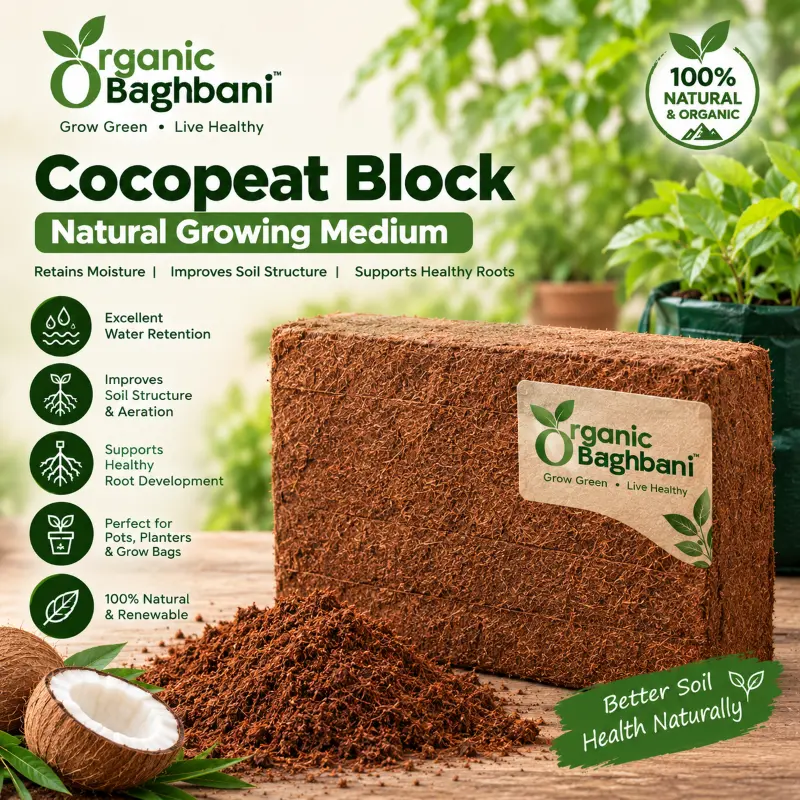
Organic Baghbani Cocopeat Block (کوکو پیٹ بلاک) is washed and buffered coconut coir pith, pressed into a dry, dense brick. Soak it in water and it swells in minutes into soft, fluffy, water-holding growing medium, enough to fill many pots from one small block. It is the space-saving, easy-to-store way to buy cocopeat, and a renewable alternative to peat moss for گملے کی مٹی (potting soil), seed trays and hanging baskets.
How Your Order Reaches You 🌿
Live step-by-step process from our store to your doorstep across Pakistan
Organic Baghbani cocopeat block is compressed cocopeat in its most compact form: fine, washed and buffered coconut coir pith, dried and pressed into a hard brick that takes a fraction of the space of loose material. It is the pith left after the long coconut fibres (ناریل کے ریشے) are removed. Add water and the brick softens and swells into a light, fluffy medium that holds water and air together, so a single block can fill many pots, seed trays or grow bags.
| Question | Answer |
|---|---|
| What is it? | A dry, dense, compressed coco coir brick of washed and buffered coir pith |
| What does it do? | Expands with water into a light, water-holding growing medium |
| Is it washed and buffered? | Yes, so it is ready to use once expanded |
| What block weights are available? | 1 kg, 5 kg and 10 kg (actual weight within about ±5%) |
| How much does it make? | Roughly 10–15 litres per kg once soaked |
| How much water does it need? | Roughly 4–5 litres per kg, added gradually |
| How long does it take to soften? | Typically 15–30 minutes for a small block; larger blocks take longer |
| What is its pH? | Typically about 5.5–6.5 |
| Does it contain nutrients? | Very few; plants need regular feeding |
| What is it not ideal for? | Cactus and succulents on their own |
Both are the same material; the difference is how it is packed. A block is dense and dry, so it is compact to store, stays clean and dust-free until you use it, and usually works out more economical and easier to transport when you need a lot. Loose cocopeat is already fluffy and ready to moisten, which suits small quantities and quick jobs.
| Feature | Cocopeat block | Loose cocopeat |
|---|---|---|
| Form | Hard, dry, compressed brick | Fluffy and ready to moisten |
| Storage space | Very compact | Bulky |
| Shipping | Dense and efficient for large quantities | Light but takes a lot of space |
| Before use | Needs soaking to expand | Needs only light wetting |
| Best for | Nurseries, farms, large pots and grow bags | Small jobs, quick repotting, top-ups |
| Block | Expands to about | Fills about |
|---|---|---|
| 1 kg | 10–15 litres | 2–3 ten-litre pots at 40% cocopeat |
| 5 kg | 50–75 litres | 12–18 ten-litre pots at 40% cocopeat |
| 10 kg | 100–150 litres | 25–37 ten-litre pots at 40% cocopeat |
These are typical figures. The exact yield depends on the block and how much water you add, so expand one block first and measure it.
| Use | Starting mix (by volume of expanded cocopeat) | Notes |
|---|---|---|
| Houseplants and patio plants | 30–50%, the rest compost, garden soil and perlite | Add perlite or pumice for drainage |
| Vegetables and herbs in pots and grow bags | 30–50% | Good in hot weather |
| Seed starting and cuttings | 50–100% fine pith, or 1:1 with vermiculite or perlite | Keep moist, not soggy |
| Hanging baskets | 40–60% | Light, and saves watering |
| Nursery bags and large containers | 30–50% | One block makes a lot of mix |
| Raised beds and heavy or sandy soil | 10–20% | Loosens clay and helps sandy soil hold water |
| Cactus, succulents and bonsai | Avoid, or use only 10–20% with pumice | It holds too much water for them |
| Worm bin bedding | Damp bedding, mixed with shredded cardboard | A good base for red wiggler worms |
These ratios are starting points. Adjust them for your climate, pot size and watering habit. Pair the cocopeat with perlite, pumice or rice husk for drainage, or with vermiculite for more moisture and nutrient holding.
Coconuts often grow in salty conditions, so raw coir can carry sodium, potassium and chloride that harm young roots. These blocks are washed to remove most of those natural salts and then buffered, which means the sodium and potassium held on the coir are exchanged for calcium. That makes the pith stable, so it does not hold back calcium and magnesium from your plants, and it is ready to use once expanded. [Add the measured EC and pH if you have them.] For seeds and very sensitive seedlings, a single rinse after expanding is still a cheap extra precaution.
| Specification | Details |
|---|---|
| Product | Compressed cocopeat block (coco coir brick) |
| Brand | Organic Baghbani |
| Material | Coconut coir pith |
| Form | Dry, compressed block |
| Block weights | 1 kg, 5 kg and 10 kg (nominal; actual weight may vary by about ±5%) |
| Block size | 5KG |
| Expands to | Roughly 10–15 litres per kg [confirm by expanding a sample] |
| Particle size | Fine |
| Treatment | Washed and buffered [add the tested EC value if you have it] |
| pH | Typically about 5.5–6.5 |
| Water holding | Very high, about 6–8 times its weight |
| Nutrient content | Very low |
| Primary use | Potting mix base, seed starting, moisture retention, grow bags, worm bedding |
| Suitable for | Houseplants, vegetables, herbs, seedlings, hanging baskets, nursery bags, raised beds |
| Not ideal for | Cactus and succulents on their own |
| Category | Soil Amendments & Mixes → [subcategory – confirm] |
| Origin | Imported coconut coir, packed in Pakistan |
| Bulk orders | Special discount on bulk quantity |
| Delivery | Across Pakistan in 2–4 working days; same-day in major cities |
People also search for: Cocopeat Block, Cocopeat Block Price in Pakistan, Best Soil Amendments & Mixes for Gardening, Seed Starting & Potting Soil Mix.
At Organic Baghbani, we believe in nurturing nature the way it was meant to be. Our mission is to help Pakistani gardeners, farmers, and plant lovers grow healthier, greener plants without relying on harsh synthetic chemicals. All our organic fertilizers and soil amendments are carefully prepared to deliver maximum nutrients directly to your plants' roots.
Bring your garden back to life with 100% natural nutrition.
🌿 100% Natural & Safe: Completely free from toxic chemicals, making it safe for your family, pets, and the environment.
🌱 Improves Soil Health: Restores natural microbes in the soil, ensuring long-term fertility and explosive plant growth.
📦 Fast Nationwide Delivery: Secure and prompt shipping right to your doorstep, anywhere in Pakistan.
👨🌾 Premium Quality Guaranteed: Lab-tested and specifically suited for the harsh Pakistani climate.
No account yet?
Create an Account


Reviews
Clear filtersThere are no reviews yet.