Popular Products


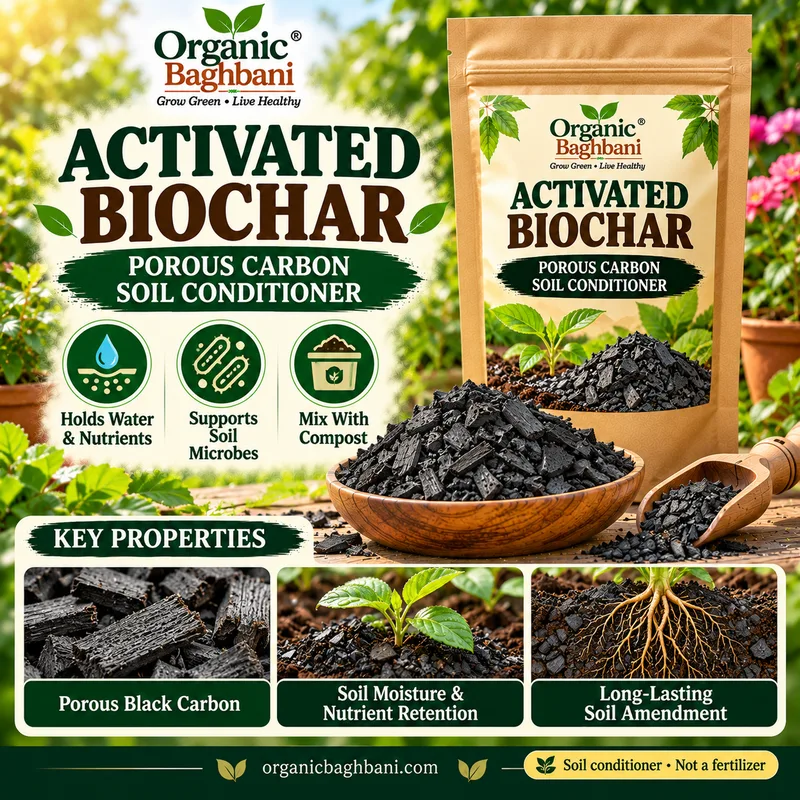
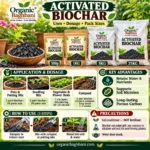
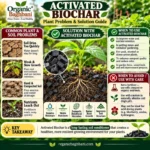
A 100% natural, lightweight porous carbon made by heating biomass with very little oxygen, then activated so it is ready to hold water, nutrients and soil microbes. It helps sandy and heavy soils keep moisture and nutrients where roots can reach them, and the carbon stays in the soil for years. It is a soil conditioner and not a fertiliser, it is usually alkaline, and it works gradually, so it is best mixed with compost.
How Your Order Reaches You 🌿
Live step-by-step process from our store to your doorstep across Pakistan
Meaning of Activated Biochar in Urdu is “فعال بائیو چار” زرعی فضلے یا لکڑی کو کم آکسیجن میں گرم کر کے بنایا گیا مسام دار کاربن جو مٹی میں پانی اور خوراک محفوظ رکھتا ہے. Biochar is the lightweight black, carbon-rich material left when biomass such as wood or crop waste is heated in very low oxygen, a process called pyrolysis. Gardeners call biochar “activated”, “charged” or “enriched” when it has been loaded with nutrients and microbes, so it holds them for plants instead of drawing them from the soil first. It is 100% natural.
Biochar is made for soil. It is different from cooking charcoal, which can contain ash and chemicals, and from the activated carbon used to filter water and air. Its tiny pores work like sponges that store water and nutrients and shelter microbes.
| Question | Answer |
|---|---|
| What is it? | Lightweight, porous carbon made from heated biomass, activated for soil use; 100% natural |
| What type of product is it? | A porous carbon soil conditioner (بائیو چار) |
| What does it do? | Holds water and nutrients in the soil, shelters microbes and loosens heavy soil |
| Is it a fertiliser? | No. Its nutrient content is low, so pair it with compost or a fertiliser |
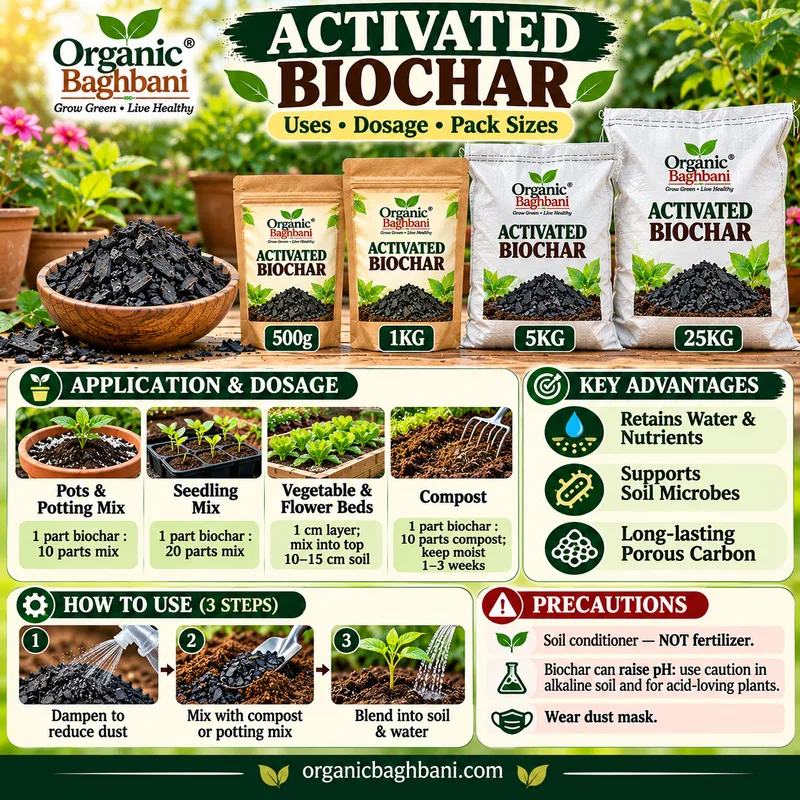
| How much should I use? | About 1 part to 10 parts potting mix, or a layer of about 1 cm mixed into the top 10–15 cm of a bed |
| How fast does it work? | Gradually. Benefits build over weeks and months, and the carbon lasts for years |
| What should I watch for? | Most biochar is alkaline and can raise soil pH, so go carefully in alkaline soil |
| What is it not for? | Acid-loving plants such as blueberries and azaleas, quick fixes, or replacing fertiliser |
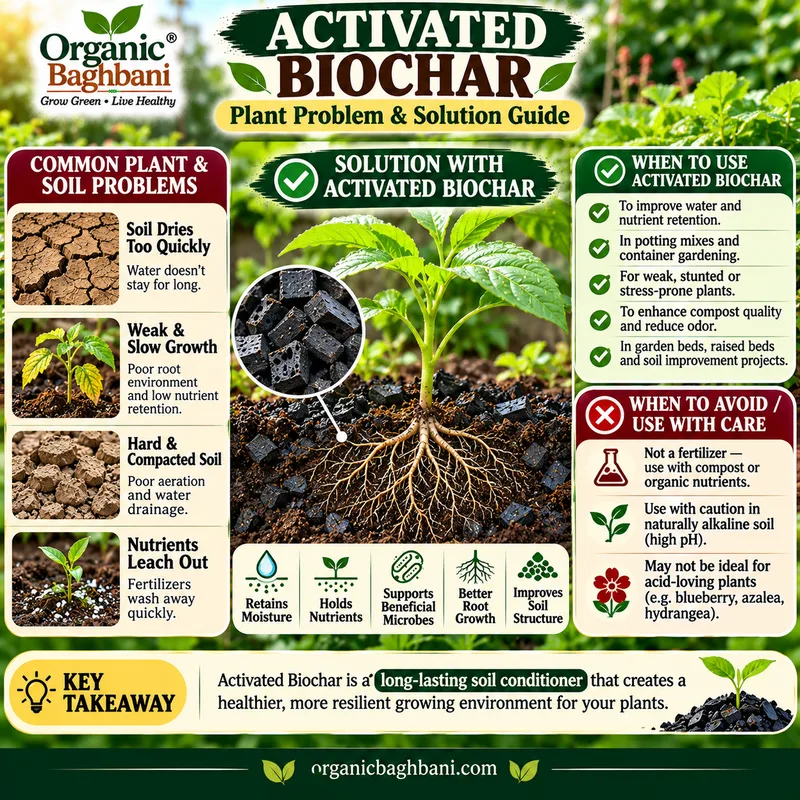
Pakistan’s heat dries soil fast, and sandy beds are the hardest to live with: every time you water or feed, much of it drains straight through, so plants stay hungry and your money ends up below the roots. Biochar’s tiny pores act like a long-lasting underground sponge, helping to hold water and dissolved nutrients close to the roots so plants have more to draw on between waterings and through dry spells.
Gardeners who have tried plain, raw biochar sometimes report pale, slow plants, because uncharged biochar can soak up nutrients from the soil at first. This biochar is pre-soaked and charged with organic matter and beneficial microbes, so its pores start out loaded instead of empty and it is much less likely to rob your soil. It is still a conditioner and not a fertiliser, so keep feeding your plants as usual.
Soil that has been worn out by years of chemical use or heavy digging can also feel lifeless, and surveys of Punjab soils report that nearly all samples are poor in organic matter. The honeycomb of pores gives beneficial bacteria and fungi, including mycorrhizal fungi, a protected place to multiply, and in heavy clay it helps open up compacted soil. Because the carbon stays in the soil for years instead of rotting away like ordinary compost, the benefit lasts. Soil life also needs organic matter and moisture, so use it with compost for the best chance of bringing tired soil back to life. If you are searching for biochar near me, you can browse our range of mulches and soil conditioners and order online from Organic Baghbani.
Results depend on your soil, your plants and your watering.
These amounts are cautious starting points taken from the lower end of typical extension guidance. Start low, because you cannot take biochar back out of the soil.
| Use | Starting amount | Notes |
|---|---|---|
| Pots and potting mix (گملا) | About 1 part biochar to 10 parts potting mix | Mix evenly through the mix before filling the pot |
| Seedling mixes | About 1 part biochar to 20 parts mix | Use a smaller share, and make sure the biochar is well charged first |
| Vegetable beds (سبزیاں) | A layer about 1 cm thick, mixed into the top 10–15 cm | Mix it with compost first. This gives roughly 5–10% by volume |
| Flower beds | A layer about 1 cm thick, mixed into the top 10–15 cm | Mix with compost first and water well |
| Fruit trees and shrubs (پھلدار درخت) | The same ratio in the top 10–15 cm under the canopy | Keep it away from the trunk, and mix with compost first |
| Compost heap (کمپوسٹ) | About 1 part biochar to 10 parts compost, by volume | Mix well and let it sit moist for 1–3 weeks before using |
Do not use it on acid-loving plants, and do not apply it to the soil surface and leave it there, because fine biochar can blow away.
| Material | Feeds plants? | Best for | How it differs |
|---|---|---|---|
| This biochar | No, nutrient content is low | Holding water and nutrients, shelter for microbes | Stable carbon that lasts for years; usually alkaline |
| Organic compost | Yes, mildly | Soil building and mulching | Breaks down over time; a good partner mixed with biochar |
| Vermicompost | Yes, mildly | Gentle feeding and potting mixes | Supplies nutrients and microbes; does not last in the soil as long |
| Rice husk | No | Aeration, mulch and compost bulking | Coarser and breaks down slowly; biochar is finer, with far more pores |
| Perlite | No | Drainage and aeration | Holds little water and no nutrients, while biochar holds both |
| Loose cocopeat | No | Water-holding growing media | Holds water but is not as long-lasting; biochar also holds nutrients |
According to Wikipedia, biochar is the lightweight black residue of carbon and ash left after pyrolysis of biomass, and it is mainly used for soil, where it is known to improve nutrient availability, aeration and water filtration. Its effects vary with the starting material, the heating temperature and the soil. The pores and large surface area hold water and nutrients and give microbes a home. Raw biochar can take up nutrients when it first goes into the soil, which is why gardeners “charge” it with compost, manure tea or liquid fertiliser before use. Most biochar is alkaline, and wood biochars are often around pH 8–10, so it can raise the pH of soil.
| Pack Size | Effective Rate | Pack Price | Select |
|---|---|---|---|
500gm | ₨ 798 / KG | ₨ 399 | |
1kg | ₨ 700 / KG | ₨ 700 | |
5kg | ₨ 580 / KG | ₨ 2,900 | |
25kg | ₨ 480 / KG | ₨ 11,999 |
Mixing biochar with compost before use is the safest way to give it a head start, because it fills the pores with nutrients and microbes. If you have the time, mix about 1 part biochar with 10 parts compost, keep the mix moist and let it sit for 1–3 weeks. If your garden soil is alkaline, use it mainly in pots and potting mixes, and keep to the low amounts.
Wear a dust mask when pouring, because fine biochar makes black dust, and dampen it before mixing. Wash your hands afterwards. Keep it away from children and open flames, and store it dry and tightly closed.
| Specification | Details |
|---|---|
| Product | Activated biochar (فعال بائیو چار) |
| Brand | Organic Baghbani |
| Material | Carbonised biomass |
| Treatment | Activated (charged) |
| Form | Dry, lightweight, porous carbon |
| Claim | 100% natural |
| Nutrient content | Low; a soil conditioner, not a fertiliser |
| Primary use | Holding water and nutrients and sheltering soil microbes |
| Suitable for | Potting mixes, vegetable and flower beds, fruit trees, compost heaps |
| Not ideal for | Acid-loving plants, strongly alkaline soils used without care, quick fixes, replacing fertiliser |
| Category | Soil Amendments & Mixes › Mulches & Soil Conditioners |
| Origin | Pakistan |
| Bulk orders | Special discount on bulk quantity; WhatsApp |
People also search for: Activated Biochar, Activated Biochar Price in Pakistan, Best Mulches & Soil Conditioners for Gardening, Seed Starting & Potting Soil Mix.
At Organic Baghbani, we believe in nurturing nature the way it was meant to be. Our mission is to help Pakistani gardeners, farmers, and plant lovers grow healthier, greener plants without relying on harsh synthetic chemicals. All our organic fertilizers and soil amendments are carefully prepared to deliver maximum nutrients directly to your plants' roots.
Bring your garden back to life with 100% natural nutrition.
🌿 100% Natural & Safe: Completely free from toxic chemicals, making it safe for your family, pets, and the environment.
🌱 Improves Soil Health: Restores natural microbes in the soil, ensuring long-term fertility and explosive plant growth.
📦 Fast Nationwide Delivery: Secure and prompt shipping right to your doorstep, anywhere in Pakistan.
👨🌾 Premium Quality Guaranteed: Lab-tested and specifically suited for the harsh Pakistani climate.
No account yet?
Create an Account


Reviews
Clear filtersThere are no reviews yet.