Popular Products


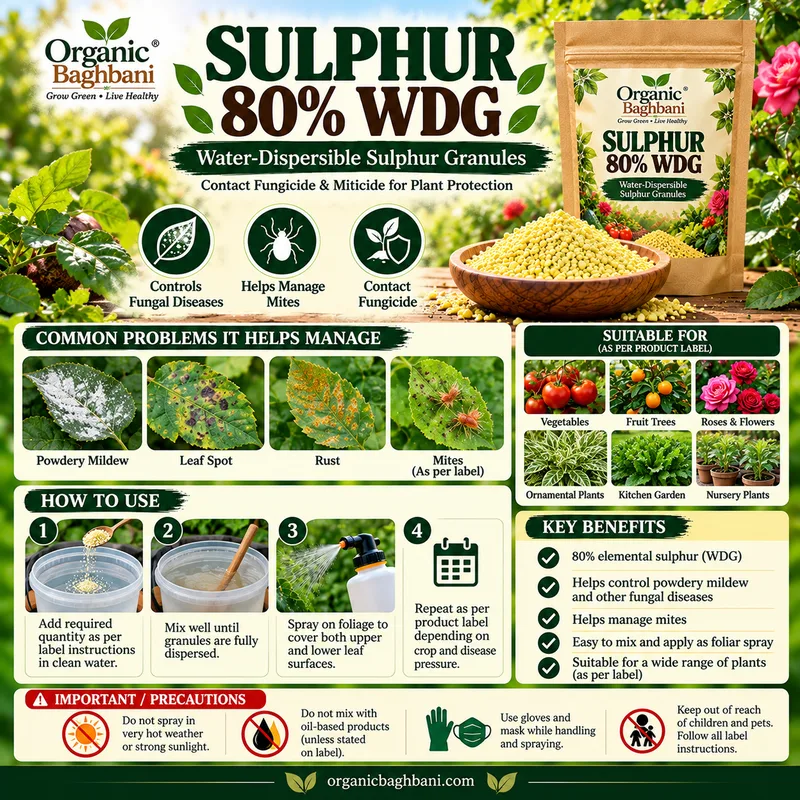
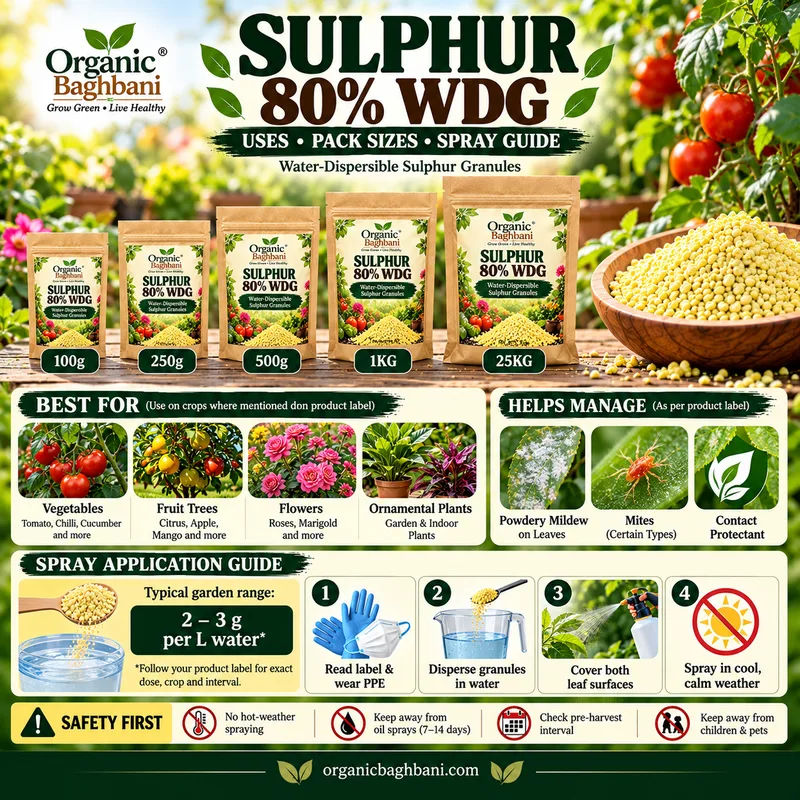
A water-dispersible sulphur granule (گندھک) that you mix with water and spray on leaves to help protect fruit trees, vegetables and flowers from powdery mildew, scab and leaf spots, and to help reduce mites. It works on the surface of the plant, so it protects best when applied early and with good coverage, and it is not a cure for deep or advanced disease. It also adds a little plant-nutrient sulphur. Always read the label and avoid spraying in hot weather.
How Your Order Reaches You 🌿
Live step-by-step process from our store to your doorstep across Pakistan
Meaning of Sulphur 80% WDG in Urdu is “گندھک 80 فیصد دانے دار” پانی میں گھل کر سپرے ہونے والی گندھک کی فنگس کش اور مائٹ کش دوا. It is one of the oldest plant-protection chemicals still in use, and it is made for growers who want to guard leaves and young shoots from mildew and mites before the damage spreads.
In simple terms, it is a pale granule that breaks up in water and is sprayed on plants. The “80%” means the product is mainly sulphur, and “WDG” means water-dispersible granules, which are easier to measure and mix than a loose dust.
| Question | Answer |
|---|---|
| What is it? | 80% sulphur in water-dispersible granules |
| What type of product is it? | Water-dispersible granule fungicide and miticide (فنگس کش اور مائٹ کش) |
| How does it work? | A contact protectant: it stays on the leaf surface and is not taken up inside the plant, so coverage matters |
| What does it do? | Helps protect against powdery mildew, scab and leaf spots, and helps reduce mites, when used as the label directs |
| How much should you use? | A typical garden spray range is about 2–3 g per litre of water; your pack label is the final word |
| When should you spray? | Before disease appears or at the very first sign, in the cooler hours of the day |
| What is it not for? | Not systemic, not a cure for advanced disease, not for hot days, and not to be mixed with oil-based sprays |
| Safety | Gloves, mask and eye protection while mixing; keep away from children, pets, food and open flame |
Pakistan’s weather suits both of sulphur’s targets. Warm days with humid nights and crowded leaves invite سفوفی پھپھوندی (powdery mildew), while long hot, dry spells bring spider mites that gather under leaves. Many garden soils here are also کھاری (alkaline), which is why sulphur is sometimes used on the soil as well.
If you have been searching for a sulphur fungicide near me, Organic Baghbani brings it to you online. Browse our Fungicides category to see what else is available for plant disease problems.
Even a long-used product should be applied exactly as its label says. Regulators such as the US EPA assess pesticide products and their labels before registration (see how that works), so your pack label matters more than any general figure. Results depend on your soil, your plants and your watering, and on spraying early and in the right weather.
These are typical starting ranges, not a lab test or a label of your pack. If your pack label shows different figures, follow the label.
| Use | Starting amount | Notes |
|---|---|---|
| Fungicide spray on vegetables, fruit trees and flowers | About 2–3 g per litre of water | Cover both sides of the leaves; repeat after 7–10 days only if the problem continues and the label allows |
| Mite control | About 3 g per litre of water | Spray leaf undersides and tender shoots; avoid weak or heat-stressed plants |
| Indoor and balcony plants | About 1–2 g per litre of water | Spray affected leaves only, outdoors or in shade, and let them dry fully before bringing them in |
| Orchards and fields | Label rate for your area | Follow the pack label for water volume and number of sprays |
| Alkaline soil (secondary use) | Only if the label lists soil use | Test soil pH first; the effect is slow, so do not repeat without re-testing |
These are starting points. Test a few leaves first on young or delicate plants.
Different products do different jobs. Choose by the problem you are solving, and see our Pest & Disease Control category for more plant-protection options.
| Product | Main job | Use it when |
|---|---|---|
| This sulphur granule | Protects leaves from mildew, scab and mites on contact | You see white powdery growth, early spots or mites, or want to protect plants in a risky season |
| Neem cake | A soil amendment from pressed neem seeds, mixed into soil rather than sprayed on leaves | You are preparing soil or feeding established plants |
| Vermicompost | Builds soil life and structure | You want steadier growth from the roots up |
| Potting soil mix | A ready growing mix with good drainage | You are repotting a plant whose roots stay too wet |
Fungicides are pesticides used to kill parasitic fungi or their spores. Sulphur is one of the traditional inorganic fungicides, and such products usually need repeated application. It is a contact type, which means it protects only where the spray lands and is not taken up inside the plant. That is why even coverage of both leaf surfaces matters, and why it works best before disease takes hold. Exactly how sulphur acts on fungi is still not fully settled, so rely on the label rather than on claims of dramatic cures.
| Specification | Details |
|---|---|
| Product | Sulphur (80%) water-dispersible granules |
| Brand | Organic Baghbani |
| Active ingredient | Sulphur 80% |
| Form | Water-dispersible granules (WDG) |
| Claim | Helps protect plants from powdery mildew, scab, leaf spots and mites when used as the label directs |
| Action | Contact protectant; not systemic |
| Application | Foliar spray, mixed with clean water |
| Primary use | Fungal disease and mite control on plants |
| Suitable for | Fruit trees, vegetables, flowers, ornamentals and garden plants, as the label allows |
| Not ideal for | Hot-weather spraying, mixing with oil-based sprays, sulphur-sensitive plants, advanced infections |
| Storage | Cool, dry place, tightly closed, away from heat, open flame, children, pets and food |
| Category | Pest & Disease Control › Fungicides |
| Bulk orders | Special discount on bulk quantity. WhatsApp or call 03119073909 |
| Pack Size | Effective Rate | Pack Price | Select |
|---|---|---|---|
100gm | ₨ 2,500 / KG | ₨ 250 | |
250gm | ₨ 1,920 / KG | ₨ 480 | |
500gm | ₨ 900 / KG | ₨ 450 | |
1kg | ₨ 750 / KG | ₨ 750 | |
25kg | ₨ 380 / KG | ₨ 9,500 |
People also search for: Sulphur 80% WDG, Sulphur 80% WDG Price in Pakistan, Best Fungicides for Gardening, Seed Starting & Potting Soil Mix.
At Organic Baghbani, we believe in nurturing nature the way it was meant to be. Our mission is to help Pakistani gardeners, farmers, and plant lovers grow healthier, greener plants without relying on harsh synthetic chemicals. All our organic fertilizers and soil amendments are carefully prepared to deliver maximum nutrients directly to your plants' roots.
Bring your garden back to life with 100% natural nutrition.
🌿 100% Natural & Safe: Completely free from toxic chemicals, making it safe for your family, pets, and the environment.
🌱 Improves Soil Health: Restores natural microbes in the soil, ensuring long-term fertility and explosive plant growth.
📦 Fast Nationwide Delivery: Secure and prompt shipping right to your doorstep, anywhere in Pakistan.
👨🌾 Premium Quality Guaranteed: Lab-tested and specifically suited for the harsh Pakistani climate.
No account yet?
Create an Account


Reviews
Clear filtersThere are no reviews yet.