Popular Products


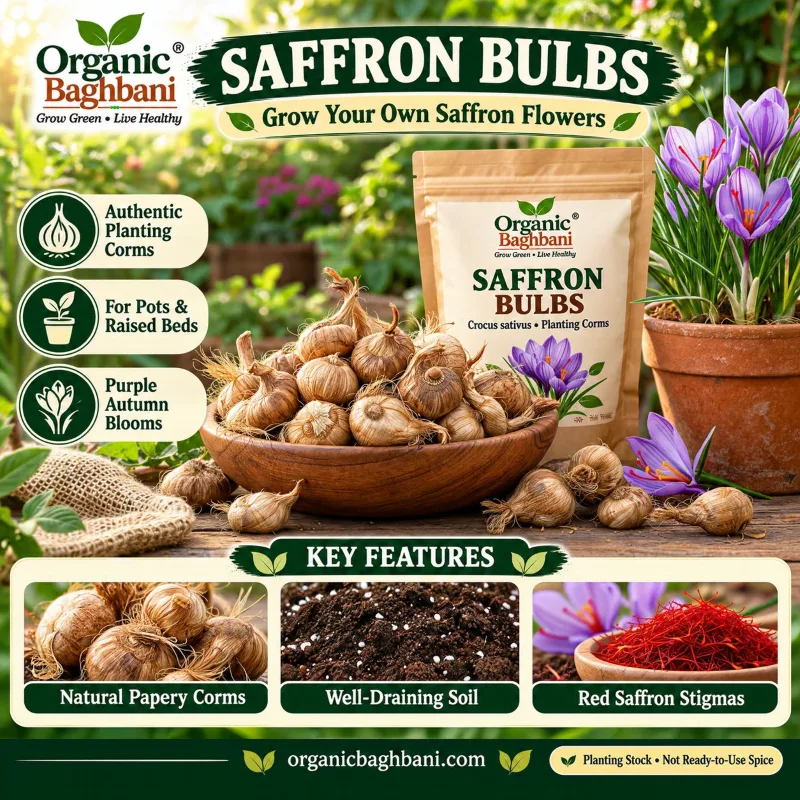
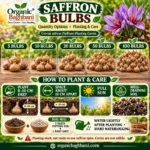
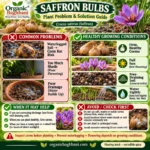
These Crocus sativus corms are the planting stock of the saffron crocus (زعفران), the autumn-flowering plant whose red stigmas are dried into saffron spice. Set in a sunny, free-draining spot, they can reward you with purple flowers and a small home harvest of threads. They are planting stock rather than ready-to-use spice, they need good drainage, and they cannot be grown from seed.
How Your Order Reaches You 🌿
Live step-by-step process from our store to your doorstep across Pakistan
Meaning of Saffron Bulbs in Urdu is “زعفران کے بلب” زعفران کے پودے کی زیرِ زمین گول گانٹھ، جس سے خزاں میں جامنی پھول اور قیمتی سرخ ریشے حاصل ہوتے ہیں۔ In plain terms, they are the corms of Crocus sativus, the saffron crocus: solid, starch-storing underground stems that carry the plant through its summer rest and feed the new leaves and flowers in autumn (خزاں).
A typical corm is a small, firm, brown knob with a flat base, wrapped in a fibrous, papery coat. It is not layered like an onion, which is why growers call it a corm rather than a true bulb, even though the market name has stuck.
| Question | Answer |
|---|---|
| What is it? | The autumn-flowering corm of Crocus sativus, the plant that gives saffron spice. |
| What does it do? | Grows into a plant with purple flowers; the red stigmas can be picked and dried into saffron threads. |
| Where does it grow best? | Full sun and loose, well-drained soil, in گملا (pots), raised beds or open beds. |
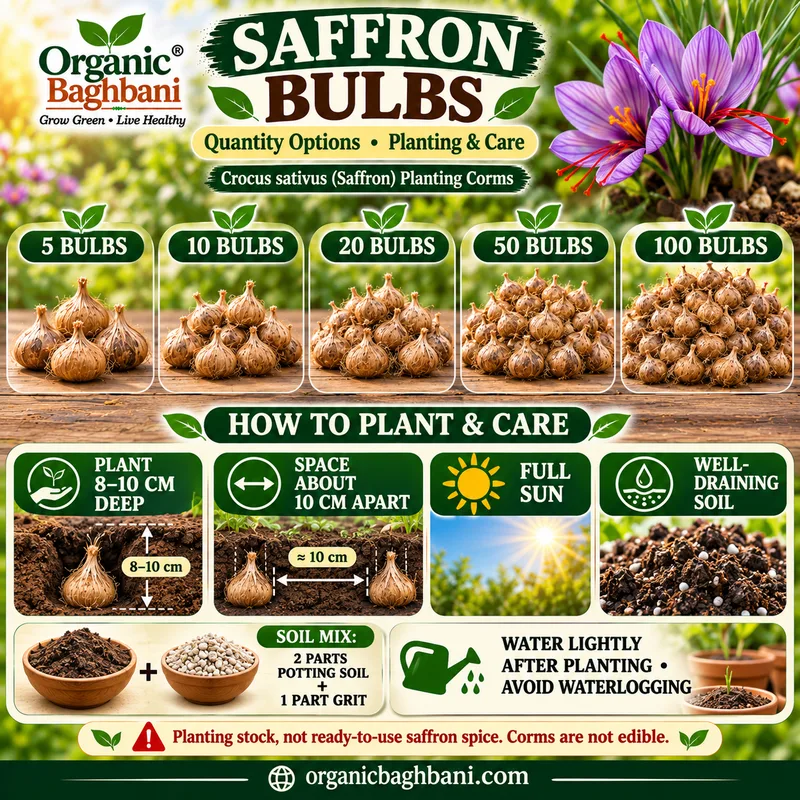
| How deep and how far apart? | Starting point: about 8–10 cm deep and about 10 cm apart. |
| What comes with it? | A small fungicide pack for an optional precautionary soak. |
| What is it not for? | Sowing like seed, waterlogged or shady spots, or anyone expecting ready-to-use spice. |
Saffron ranks among the world’s costliest spices because every flower carries only three stigmas, and all of them are picked by hand. A small patch at home turns that rarity into a garden project: purple flowers in autumn and a few fresh threads you dry yourself.
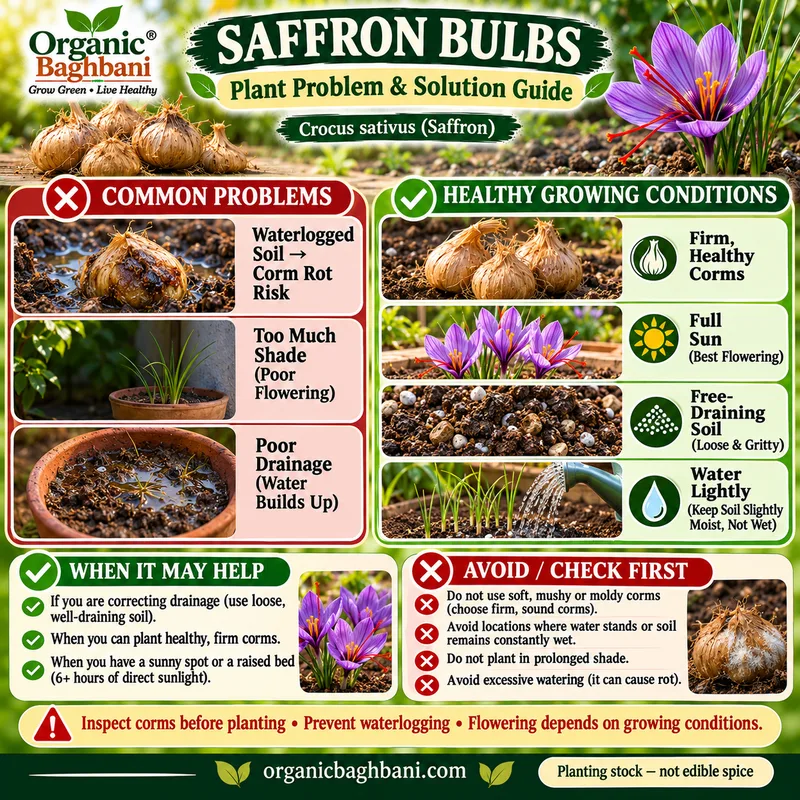
Pakistani conditions need a little planning. The saffron crocus likes hot, dry summers and cooler autumns, and it is a poor match for soil that stays wet. In many regions the monsoon arrives while the corms are resting, and heavy بھاری مٹی (heavy soil) can hold water around them. Raised beds, deep pots and a free-draining mix of گملے کی مٹی (potting soil) and gritty material solve most of that, because good پانی کا نکاس (drainage) is the single biggest factor in keeping corms healthy.
If you have been searching for saffron corms near me, ordering online from Organic Baghbani saves the trip to a distant nursery, and our Ready-to-Use Soil Mixes range covers the soil side of the job.
Results depend on your soil, your plants and your watering.
| Where | Starting point | Notes |
|---|---|---|
| Pots and grow bags (گملا) | About 8–10 cm deep, about 10 cm apart | Use a deep container with drainage holes and keep it in full sun. |
| Raised beds | Same depth and spacing | The best option for heavy soil because water drains away faster. |
| Open garden beds | Same depth and spacing | Loosen the soil first and mix in grit or compost if it is heavy. |
| Balcony or rooftop (چھت کا باغ) | Same depth and spacing | Pick a sunny corner and keep pots from sitting in standing water during monsoon rain. |
| Soil mix | About 2 parts potting soil to 1 part gritty material | Add a little well-decomposed compost, never fresh manure. |
| Watering | Water lightly after planting | Then water only when the top layer is dry, and keep the soil on the dry side while the corms rest. |
These figures are starting points, not rules. At about 10 cm spacing, one square metre holds roughly 100 corms.
| Product | What it does for corms | Notes |
|---|---|---|
| Potting Soil Mix | Base for pots and grow bags | Blend with gritty material so water drains quickly. |
| Perlite | Adds air and drainage | Lightweight, holds little water and adds no nutrients; dampen it before mixing to limit dust. |
| Fine Pumice Stone 3–6mm | Keeps the mix open | A gritty, durable stone that helps water move through the pot. |
| Organic Compost | Adds organic matter in small amounts | Mix in well-decomposed compost before planting; skip fresh manure. |
| Cocopeat and peat moss | Hold a lot of water | Better saved for seedlings; they can stay too wet for resting corms. |
The saffron crocus is a sterile triploid plant, so it does not produce viable seed. Every new plant comes from a corm: the corm stores starch through the summer rest, sends up narrow leaves and purple buds in early autumn, and flowers in mid-autumn. A corm lasts one season and can produce up to ten cormlets that grow on in later seasons, which is why saffron is multiplied by dividing and replanting corms, as Wikipedia’s saffron article explains. Depth matters too: deeper corms tend to give better-quality threads but fewer flowers and cormlets, while about 8–10 cm balances flower and corm production.
| Detail | Information |
|---|---|
| Product | Saffron crocus corms (Crocus sativus) |
| Brand | Organic Baghbani |
| Material | Natural plant corms |
| Form | Corms (solid underground storage stems) |
| Included extra | Small fungicide pack for an optional soak |
| Claim | Natural planting stock; no germination, flowering or yield guarantee |
| Primary use | Growing saffron crocus plants for autumn flowers and home-harvested threads |
| Suitable for | Pots, grow bags, raised beds, sunny garden beds, balconies and rooftops |
| Not ideal for | Seed sowing, waterlogged or shady spots, or anyone expecting ready-to-use spice |
| Bulk orders | Special discount on bulk quantity, WhatsApp or call 03119073909 |
| Pack Size | Effective Rate | Pack Price | Select |
|---|---|---|---|
5 bulbs | ₨ 120 / piece | ₨ 600 | |
10 bulbs | ₨ 110 / piece | ₨ 1,100 | |
20 bulbs | ₨ 105 / piece | ₨ 2,100 | |
50 bulbs | ₨ 104 / piece | ₨ 5,200 | |
100 bulbs | ₨ 100 / piece | ₨ 10,000 |
People also search for: Saffron Bulbs, Saffron Bulbs Price in Pakistan, Best Premium Seeds & Flower Bulbs for Gardening, Seed Starting & Potting Soil Mix.
At Organic Baghbani, we believe in nurturing nature the way it was meant to be. Our mission is to help Pakistani gardeners, farmers, and plant lovers grow healthier, greener plants without relying on harsh synthetic chemicals. All our organic fertilizers and soil amendments are carefully prepared to deliver maximum nutrients directly to your plants' roots.
Bring your garden back to life with 100% natural nutrition.
🌿 100% Natural & Safe: Completely free from toxic chemicals, making it safe for your family, pets, and the environment.
🌱 Improves Soil Health: Restores natural microbes in the soil, ensuring long-term fertility and explosive plant growth.
📦 Fast Nationwide Delivery: Secure and prompt shipping right to your doorstep, anywhere in Pakistan.
👨🌾 Premium Quality Guaranteed: Lab-tested and specifically suited for the harsh Pakistani climate.
No account yet?
Create an Account


Reviews
Clear filtersThere are no reviews yet.